

pH Balanced Deodorizing Dog Shampoo Ingredients That Work
The ingredients that reliably deodorize a dog’s coat fall into a short list: enzymes (lipase and protease), zinc ricinoleate, baking soda, and botanical neutralizers like green tea or rosemary extract, usually paired with a mild surfactant base. Fragrance can mask a smell for an hour. These ingredients actually break down or trap the molecules causing it. The one rule that matters more than any single ingredient is choosing a formula labeled pH-balanced for dogs, since canine skin chemistry is not the same as ours, and giving that product enough contact time to work before you rinse it out.
TL;DR:
- Look for shampoos labeled pH-balanced for dogs, with active ingredients like enzymes, zinc ricinoleate, or baking soda that neutralize odors at the source.
- Dwell time of 90 seconds to 3 minutes is critical for active ingredients to effectively break down odorous oils and bacteria before rinsing.
- Avoid formulas with high fragrance or essential oils at the top of the ingredient list, especially for sensitive or allergy-prone dogs.
- Hard water can hinder shampoo performance, so double rinsing is recommended if the coat feels waxy or the odor returns quickly.
- Homemade recipes with human shampoo, undiluted vinegar, or concentrated essential oils should be avoided because they can irritate skin and disrupt the coat’s natural barrier.
Table of Contents
- What “Deodorizing Dog Shampoo Ingredients” Actually Means
- Top Deodorizing Ingredients And What They Actually Do
- Neutralizing Versus Masking: Why Some Shampoos Work Longer
- Reading The Label: pH, Surfactants, And Fragrance Safety
- How To Apply Deodorizing Shampoo For The Best Results
- Ingredients And DIY Shortcuts To Avoid
- Allergies And Skin Sensitivities From Deodorizing Ingredients
- Getting The Concentration Right For Everyday Use
- Does Hard Water Affect How Well Deodorizing Shampoo Works
- Are Deodorizing Ingredients Safe For The Environment
- What Actually Matters When You’re Standing In The Aisle
- Shampoo And Scent Options Built Around These Ingredients
- Sources
- FAQ
What “Deodorizing Dog Shampoo Ingredients” Actually Means
“Deodorizing” gets used loosely on pet product labels. Some brands mean “smells nice for a day.” Others mean the formula contains an ingredient that chemically neutralizes odor at the source. The distinction matters for your shopping list, and it’s the reason this guide treats deodorizing dog shampoo ingredients as a category with real chemistry behind it rather than just a marketing word on a bottle.
Top Deodorizing Ingredients And What They Actually Do
Read past the front label and check the ingredient list. Here’s what does the real work in an odor control shampoo for dogs:
- Enzymes (lipase, protease, “plant enzymes”): These break down the oils and proteins on the coat and skin that bacteria feed on to produce that musty, yeasty dog smell. Once the food source is gone, the odor has nowhere to regenerate from, which is why enzyme-based cleaners tend to outlast a purely scented shampoo.
- Zinc ricinoleate: This is a genuine odor-trapping compound, not a fragrance. It binds to malodor molecules and interferes with your nose’s ability to detect them, working closer to how commercial odor eliminators function than to a perfume.
- Baking soda (sodium bicarbonate): A classic adsorbent. It pulls odor molecules onto its surface rather than covering them up, and it shows up in mainstream formulas like the Fresh 'n Clean Oatmeal 'n Baking Soda Shampoo, usually paired with a soothing agent to offset its drying effect.
- Botanical neutralizers (green tea extract, rosemary oil): These bring real antioxidant and mild antimicrobial activity, and several deodorizing lines built around natural dog shampoo components lean on them, including the ATTITUDE 2-in-1 deodorizing pet shampoo. They’re gentler than zinc ricinoleate or enzymes, and best treated as support players for mild, recurring odor rather than a fix for something serious.
- Soothing co-ingredients (colloidal oatmeal, aloe vera, provitamin B5): None of these deodorize on their own, but they matter because active deodorizers can be drying or slightly irritating. Pairing them with oatmeal or aloe keeps the skin barrier intact while the actives do their job.
Most well-built deodorizing shampoo for pets combines two categories: one active neutralizer and one soothing agent. A bottle that lists only fragrance and water near the top of its ingredient list is not doing much beyond perfuming the coat.
Neutralizing Versus Masking: Why Some Shampoos Work Longer
Fragrance masks. Enzymes and zinc ricinoleate neutralize. That’s the entire difference, and it explains why a heavily scented shampoo can smell great in the tub and disappointing by dinner.
Masking works by overpowering your nose with a stronger, more pleasant smell layered on top of the odor molecule, which is still sitting on the coat, unchanged. Neutralization changes or traps the molecule itself, so once it’s gone, it’s gone, not just buried under vanilla or lavender.
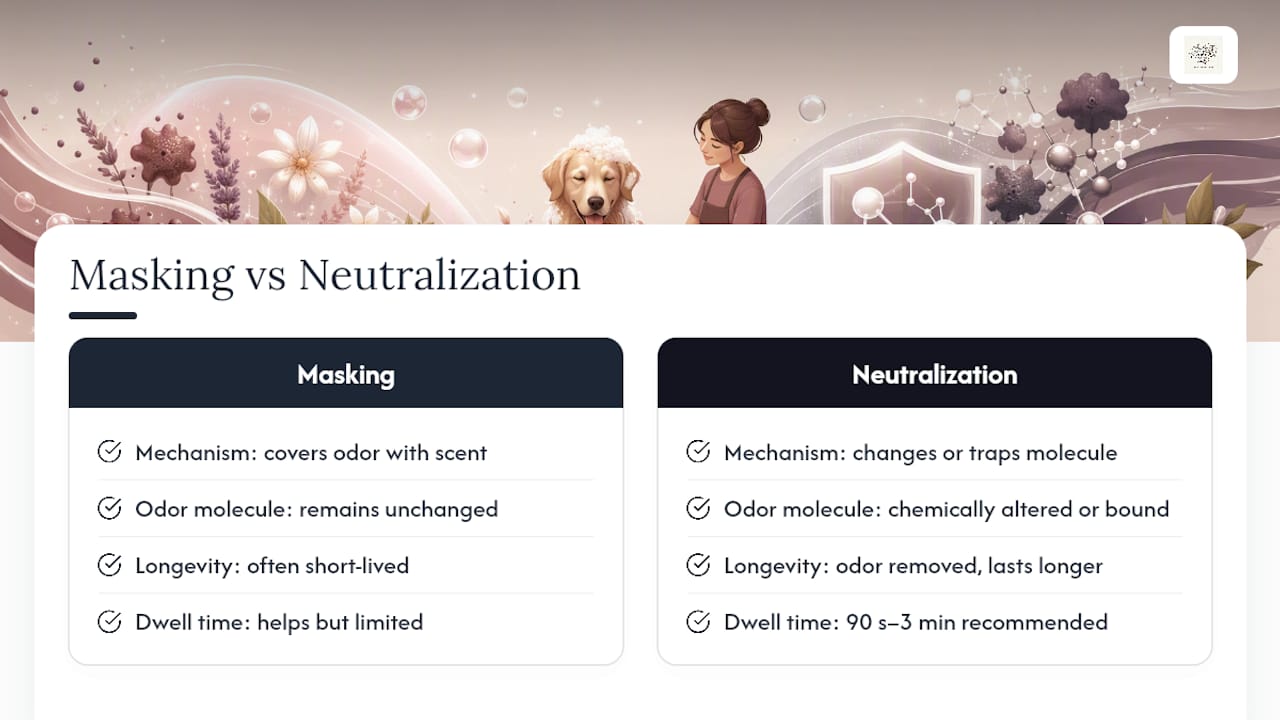
Dwell time decides how well either mechanism works. Grooming guidance around products like the DOUXO S3 SEB or Odor Control line recommends letting shampoo sit on the coat for 90 seconds to 3 minutes before rinsing, giving active ingredients time to actually interact with the oils and bacteria causing the smell.
If your dog smells bad again within a day or two despite a proper wash and dwell time, that’s often not a shampoo problem. Yeast overgrowth, skin infections, and impacted anal glands all produce persistent odor that no ingredient list will fix. That calls for a veterinary visit, not a stronger shampoo.
Reading The Label: pH, Surfactants, And Fragrance Safety
Dog skin runs closer to neutral to slightly alkaline, while human skin sits more acidic. That gap is why human shampoo strips a dog’s protective skin barrier and leaves the coat drier and, ironically, smellier over time. Look specifically for wording like “pH-balanced for dogs,” and treat that phrase as a bigger deciding factor than any single deodorizing active.
Surfactants are the cleansers doing the actual washing, and not all of them are equal:
- Prefer: coco-glucoside, sodium cocoyl isethionate, decyl glucoside. These clean effectively without stripping natural oils.
- Avoid or minimize: sodium lauryl sulfate and harsh soap bases, which tend to over-dry skin and can undo the benefit of any deodorizing active in the formula.
Some formulators adjust final pH with citric acid, landing the finished product around 7.0 to 8.0, which is a common target range for pH-adjusted pet shampoo formulations. On preservatives, phenoxyethanol and sodium benzoate at low, standard concentrations are widely used and considered low-risk; be more cautious with formulas relying heavily on essential oils as both fragrance and preservative, especially concentrated tea tree or wintergreen, which can be genuinely toxic to dogs in the wrong dose.
Pro Tip: If a shampoo lists an essential oil in the first five ingredients rather than near the bottom, treat that as a concentration warning, not a selling point.
How To Apply Deodorizing Shampoo For The Best Results
Getting the timing right matters as much as picking the right bottle.
- Wet your dog’s coat completely down to the skin, not just the surface fur. A half-soaked coat dilutes the shampoo unevenly.
- Apply the shampoo and massage it into the skin itself, working it through in sections rather than just lathering the outer coat.
- Let it sit for 90 seconds to 3 minutes so enzymes, zinc ricinoleate, or botanical actives have time to work.
- Rinse thoroughly until the water runs completely clear and the coat feels slick rather than slippery or soapy.
- Follow with a pH-balanced conditioner if your dog has dry or sensitive skin.
Once weekly is a reasonable ceiling for most dogs with odor issues; bathing more often than that can strip natural oils and leave the coat drier, which often makes odor worse, not better. If the smell returns within a day or two of a proper bath, or if you notice greasy patches, scratching, or a strong yeasty smell around the ears or paws, that points toward a medical issue rather than a shampoo problem.
Ingredients And DIY Shortcuts To Avoid
Pinterest-style dog shampoo recipes circulate constantly, and most of them ignore the pH problem entirely.
- Human shampoo and dish soap: Both are formulated for a different skin pH and strip the protective oils that keep a dog’s coat healthy, according to AKC guidance on homemade dog shampoo.
- Undiluted vinegar: Straight vinegar is acidic enough to irritate skin and disrupt the coat’s natural barrier; if you use it at all, it needs heavy dilution and should never touch broken skin.
- Excess baking soda: A light dusting in a formulated shampoo is one thing. Straight baking soda paste applied repeatedly can dry and irritate skin and shift its pH the wrong direction.
- Concentrated essential oils: “Natural” does not mean safe at full strength, and several common oils are genuinely dangerous for dogs undiluted.
- Label red flags: avoid anything listing bleach, industrial degreasers, or high alcohol content near the top of the ingredient list. Those belong nowhere near a dog’s skin.
A vet-formulated or groomer-recommended deodorizing shampoo, properly diluted per the label, beats a homemade recipe almost every time. If you want a safe, gentler option worth reading up on, see this breakdown of why gentle, pH-balanced shampoo matters for dogs.
Allergies And Skin Sensitivities From Deodorizing Ingredients
Not every dog reacts the same way to the same active. Zinc ricinoleate is generally well tolerated, but fragrance additives and certain botanical extracts cause more sensitivity complaints than the actual deodorizing actives do. Essential oil concentrations are the most common trigger for redness or itching after a bath, particularly in dogs with existing skin conditions.
Watch for redness, excessive licking, hives, or hair loss in the days following a bath. If those symptoms show up consistently after using a scented or botanical-heavy formula, switch to a fragrance-free, oatmeal-based product and see whether the reaction resolves. Dogs with diagnosed skin allergies often do better on a simplified ingredient list with one active and one soothing agent rather than a shampoo trying to do five things at once. For dogs with a documented allergy history, a multimodal approach to skin allergy management beyond just shampoo choice tends to produce better long-term results, since diet, environment, and topical care usually all play a role.
Patch-testing a new deodorizing shampoo on a small area of skin, waiting 24 hours before a full bath, is a low-effort way to catch a sensitivity before it becomes a full-body problem.
Getting The Concentration Right For Everyday Use
More active ingredient is not automatically better. Formulators generally aim for the lowest effective concentration of an active like zinc ricinoleate or baking soda that still controls odor, because pushing concentration higher raises irritation risk without much added benefit.
For routine use, look for products where the deodorizing active sits in the middle of the ingredient list, not first (a sign of a heavy, harsh concentration) and not buried at the very end (a sign it’s present in a token amount for marketing purposes only). A balanced formulation typically pairs one active neutralizer with a soothing ingredient like colloidal oatmeal or aloe at a comparable position on the list, which signals the formulator built the product around skin comfort rather than raw odor-fighting strength alone.
Dogs bathed weekly for general maintenance do fine with a milder concentration designed for routine use. Dogs with chronic odor issues sometimes need a stronger, groomer-grade formula, but those are better used periodically rather than every week, since frequent exposure to a higher-strength active raises the odds of dryness or irritation over time.
Does Hard Water Affect How Well Deodorizing Shampoo Works
Hard water, high in calcium and magnesium, interferes with how well surfactants lather and rinse clean. In hard water conditions, mild surfactants like coco-glucoside can leave slightly more mineral residue behind, and that residue can trap odor-causing bacteria against the skin even after a proper wash.
If you’re in a hard water area and notice your dog’s coat feels waxy or the odor returns faster than expected, a thorough double rinse helps more than switching shampoos. Running your fingers through the coat after rinsing is a quick check. If it feels sticky or slightly soapy rather than clean and slick, rinse again before calling the bath finished. Soft water generally allows deodorizing actives and surfactants to rinse more completely, which is part of why the same shampoo can perform noticeably differently from one household’s tap to another.
Are Deodorizing Ingredients Safe For The Environment
Enzymes and plant-derived surfactants like coco-glucoside and decyl glucoside are generally biodegradable and break down readily in wastewater treatment, which matters if you’re bathing a dog outdoors near soil or a storm drain. Baking soda is naturally biodegradable and low in aquatic toxicity, which is part of why it shows up so often in natural dog shampoo components marketed as gentler on the environment.
Synthetic fragrance compounds and some preservative systems raise more questions, since not all fragrance blends disclose their full breakdown profile. Sulfate-based surfactants, beyond being harsher on skin, also tend to biodegrade more slowly than glucoside-based alternatives. If environmental impact matters to you as much as odor control, favor formulas that lead with plant-derived surfactants and skip synthetic fragrance blends in favor of a botanical extract doing double duty as both scent and mild deodorizer.
What Actually Matters When You’re Standing In The Aisle
Most of the confusion around deodorizing shampoo comes from treating fragrance as the main event. It isn’t. Fragrance is the last five percent of a good formula, not the first.
If I had to boil this down to a shopping filter, it’s three checks: confirm the label says pH-balanced or pH-adjusted for dogs, confirm there’s an actual neutralizer on the ingredient list (an enzyme, zinc ricinoleate, or baking soda), and confirm there’s a soothing co-ingredient like colloidal oatmeal or aloe if your dog has sensitive skin at all. That’s it. Everything else on the bottle is secondary.
The brand leans toward US-made grooming products specifically because domestic manufacturing tends to come with clearer ingredient disclosure and fewer surprises on the label, which matters more in a category where “natural” and “deodorizing” are used so loosely. That’s the standard worth holding any bottle to, whatever brand ends up in your bathroom.
— Christopher
Shampoo And Scent Options Built Around These Ingredients
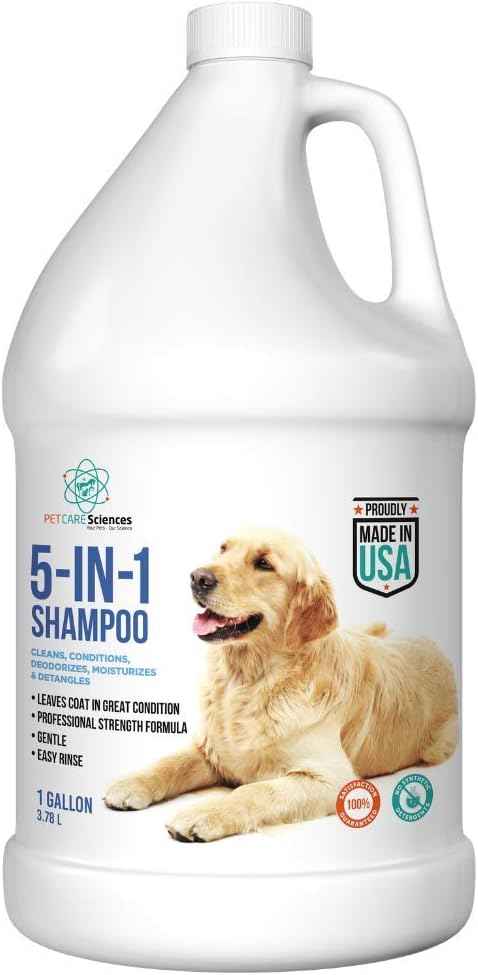
If your dog needs real odor control rather than a quick perfume fix, the Gallon Bottle 5 in 1 Dog Shampoo for Itchy Skin is built for exactly that case: a pH-balanced formula sized for households dealing with persistent odor or sensitive skin, made in the USA rather than sourced from an unlabeled overseas supplier.
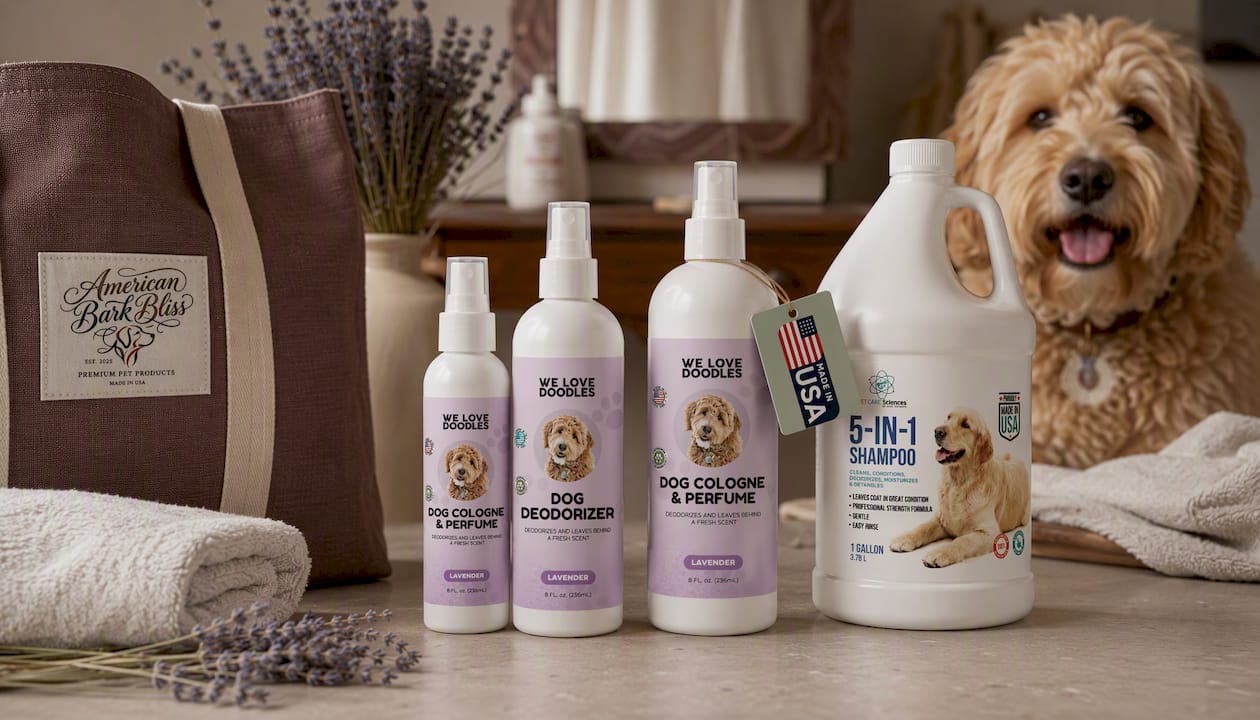
For maintenance between baths, Dog Cologne & Perfume gives you a scent finish without pretending to replace a real wash. If lavender’s your preference, the Dog Deodorizer, Cologne & Perfume in Lavender works the same way. Use the gallon shampoo for the actual odor problem, and the cologne for the day or two after, when you just want your dog smelling good on the way out the door. Browse the full grooming and care lineup to build out a full routine, and check the dog treats collection while you’re at it since a good grooming routine usually comes with good behavior habits, too.
Sources
- DOUXO SPA Odour Control Shampoo (product page)
- AKC: Easy natural homemade dog shampoo (expert advice)
- Colonial Chemical natural pet shampoo formulation
- Fresh 'n Clean Oatmeal 'n Baking Soda Shampoo (product page)
FAQ
What Ingredients Actually Remove Dog Odor Instead Of Masking It?
Enzymes, zinc ricinoleate, and baking soda neutralize or trap odor molecules directly, while fragrance and most essential oils only cover the smell temporarily.
How Long Should Deodorizing Shampoo Stay On My Dog’s Coat?
Grooming guidance recommends leaving it on for 90 seconds to 3 minutes before rinsing, so the active ingredients have time to work on the skin.
Is Baking Soda Safe In Dog Shampoo?
Baking soda is safe at the low concentrations used in formulated products, especially when paired with a soothing ingredient like colloidal oatmeal, but undiluted paste applied directly and repeatedly can dry and irritate skin.
Can I Use Human Shampoo On My Dog To Cut Costs?
No. Human shampoo is formulated for a more acidic skin pH than dogs have, and using it regularly can strip the natural protective oils on a dog’s coat.
What Does American Bark Bliss Recommend For Persistent Odor?
For ongoing odor or sensitive skin, the Gallon Bottle 5 in 1 Dog Shampoo is formulated as a pH-balanced option made in the USA; current pricing is listed on the product page.
Leave a comment