

4–8 Week Mobility Gains: Collagen for Dogs, UC‑II vs Hydrolyzed Peptides
Yes, collagen can help dogs, mainly by supporting joint mobility, skin resilience, and gut lining health. Undenatured type II collagen (UC-II) has the strongest clinical track record for osteoarthritis, while hydrolyzed collagen peptides work better for coat and general connective tissue support. Most owners notice changes within 4 to 8 weeks. Always check with your vet first if your dog takes other medications.
TL;DR:
- UC-II (undenatured type II collagen) shows about 20% improvement in mobility scores within 4 to 8 weeks, especially in dogs with osteoarthritis.
- Hydrolyzed collagen peptides support coat and connective tissue health but have less consistent evidence for joint relief, and dosing varies across studies.
- Collagen is generally safe, but starting with a lower dose and monitoring for gastrointestinal upset is recommended, especially if your dog is on medication.
- The effectiveness depends on matching the collagen type to the specific goal, with UC-II best for joint issues and peptides suitable for general wellness.
- Collagen works best as part of a broader joint care plan that includes weight management and controlled exercise.
Table of Contents
- What Is Collagen and How Does It Work in Dogs?
- What Benefits Can Dog Owners Actually Expect?
- Which Form of Collagen Should You Choose?
- How Strong Is the Clinical Evidence, and How Long Until You See Results?
- Is Collagen Safe for Dogs, and What Should You Watch For?
- How Do You Add Collagen to Your Dog’s Routine?
- Why American Bark Bliss Approaches Collagen Differently
- Christopher’s Take: Stop Treating All Collagen the Same
- Where to Start: American Bark Bliss Picks for Collagen Support
- Sources
- FAQ
What Is Collagen and How Does It Work in Dogs?
Collagen is the main structural protein in cartilage, tendons, skin, and connective tissue. Roughly a third of a dog’s total body protein is collagen, which is why a breakdown in production, common with age, shows up everywhere from stiff joints to a duller coat.
Not all collagen works the same way inside a dog’s body:
- Type I and III collagen support skin, tendons, and ligaments, and hydrolyzed peptides deliver the amino acid building blocks (glycine, proline, hydroxyproline) dogs need to maintain them.
- Type II collagen makes up cartilage, the cushioning tissue in joints.
- Hydrolyzed peptides act as raw nutritional material, small enough for easy digestion and absorption.
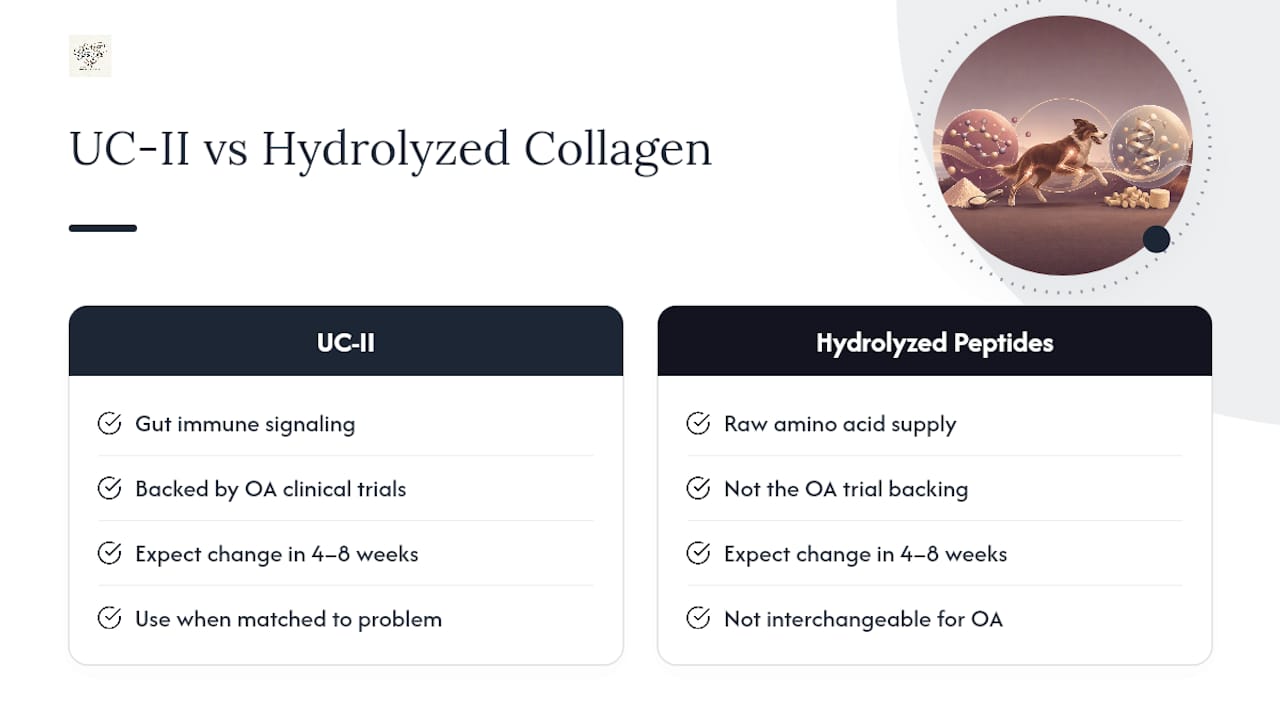
- UC-II (undenatured type II collagen) works differently. It’s kept intact rather than broken down, and it interacts with gut immune tissue through a mechanism called oral tolerance immunomodulation, which appears to calm joint inflammation rather than simply supply nutrients.
That distinction, feeding tissue versus signaling the immune system, explains why the two forms get recommended for different goals.
What Benefits Can Dog Owners Actually Expect?
Collagen’s effects land in three areas, and the strength of evidence differs across each one.
- Joint and mobility support. Dogs with mild to moderate osteoarthritis show reduced stiffness, more willingness to climb stairs or jump onto furniture, and in trials, measurable improvement in weight-bearing and gait.
- Skin and coat quality. Amino acids from collagen support skin elasticity and a glossier coat, though this effect is more nutritional than clinical, dogs on a balanced diet already get much of this from whole-food protein.
- Digestive and gut support. Glycine and collagen peptides may help support the gut lining, but this evidence is far more indirect than the joint data, drawn mostly from mechanistic studies rather than large dog trials.
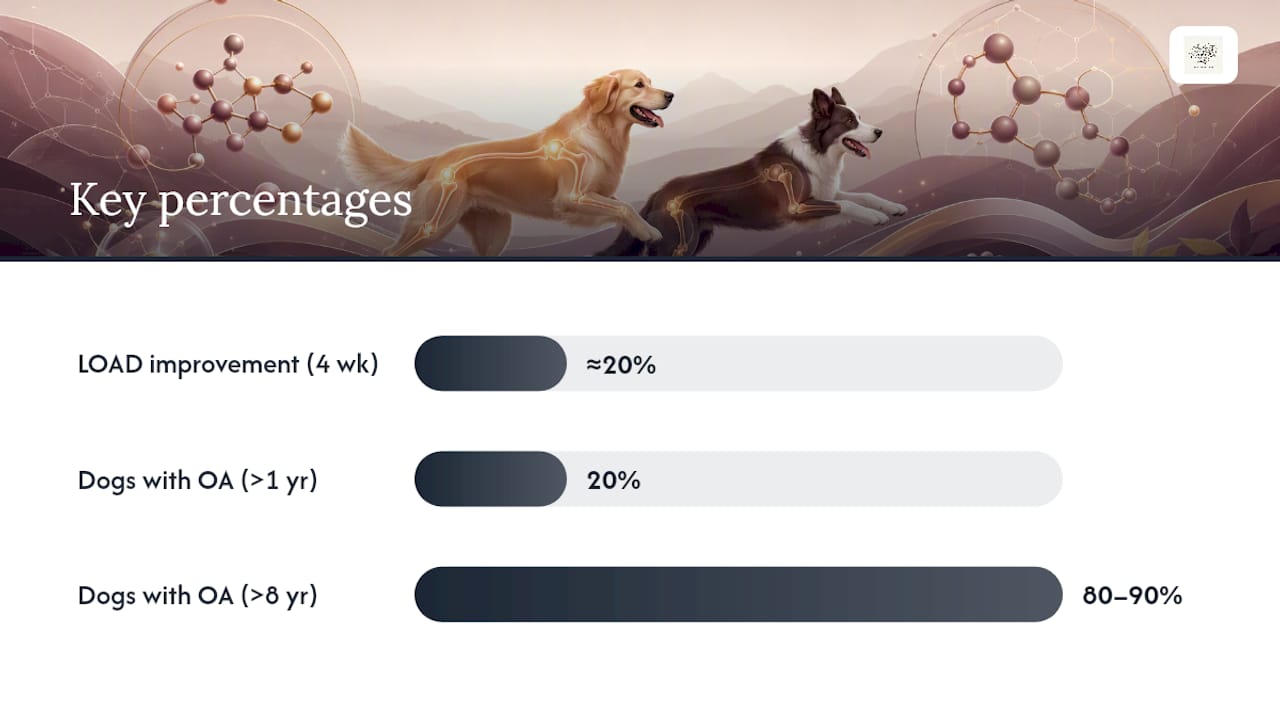
Where the evidence is strongest: a randomized, double-blind, placebo-controlled trial of UC-II combined with Boswellia serrata found roughly a 20% improvement in LOAD (Liverpool Osteoarthritis in Dogs) scores after just 4 weeks, with more pronounced mobility gains by week 8.
Older dogs, large and active breeds, and dogs showing early signs of osteoarthritis tend to benefit most. That’s not surprising given that arthritis affects an estimated 20% of dogs over age one and up to 80 to 90% of dogs over age eight. Collagen isn’t a stand-alone fix, though. It works best as one piece of a broader joint care plan that includes weight management and controlled exercise.
Which Form of Collagen Should You Choose?
The form matters as much as the fact that it’s “collagen.” Here’s how the main options break down:
- Hydrolyzed collagen peptides are broken into small, easily absorbed chains. Best for general connective tissue support, skin, and coat health, and they mix easily into food or water.
- UC-II (undenatured type II collagen) stays structurally intact and works through immune signaling rather than raw nutrition. Best for dogs with diagnosed or suspected osteoarthritis, since this is the form behind most of the mobility trial data.
- Eggshell membrane contains a natural blend of collagen, glucosamine, and hyaluronic acid. It shows promise in multi-ingredient joint formulas, but concentrations vary by brand and it’s rarely used alone.
- Bone broth offers collagen in food form, but the actual collagen content swings wildly depending on the bones used and cooking time, making dosing unpredictable. Hydrolyzed protein sources generally offer more consistent bioavailability than broth alone.
If you’re managing a specific joint issue, UC-II gets the clearer nod. If you’re after general wellness and coat shine, hydrolyzed peptides are the more flexible, budget-friendly pick.
How Strong Is the Clinical Evidence, and How Long Until You See Results?
The clearest signal comes from UC-II research. The randomized, double-blind, placebo-controlled crossover trial combining UC-II with Boswellia serrata reported owner-observed mobility gains as early as 4 weeks, with clinically meaningful improvement by 8 weeks. Hydrolyzed collagen research tells a messier story. Trials show improvements in lameness scores and some gait parameters, but dosing protocols vary so much between studies, some fixed at grams per day, others weight-based, that firm dosing guidelines still don’t exist.
A separate multicenter trial testing a formula that included eggshell membrane, omega-3s, and hyaluronic acid found statistically significant improvements in validated CBPI and LOAD scores over 90 days, reinforcing that collagen tends to perform best as part of a blend rather than in isolation.
| Evidence source | What it measured | Timeframe | Strength of finding |
|---|---|---|---|
| UC-II + Boswellia RCT | LOAD score, owner-assessed mobility | 4 to 8 weeks | Strong, statistically significant |
| Hydrolyzed collagen trials | Lameness, gait parameters | Varies by study | Mixed, promising but inconsistent |
| Multi-ingredient formula (eggshell membrane, omega-3s) | CBPI and LOAD scores | 90 days | Strong, statistically significant |
The Cornell Riney Canine Health Center frames all of this correctly: supplements are adjuncts, not replacements for weight control and exercise. Larger, standardized trials are still needed before dosing recommendations can be tightened across the board.
Is Collagen Safe for Dogs, and What Should You Watch For?
Collagen is generally well tolerated. The most common issue is mild gastrointestinal upset, loose stool or reduced appetite, usually when a dog starts at too high a dose too quickly.
- Start with a lower dose than the label suggests and increase gradually over a week or two.
- Give collagen with food, which reduces the likelihood of stomach upset.
- If your dog takes any medication, talk to your vet before adding a new supplement. Treat it with the same caution as a drug interaction check, not an afterthought.
- Watch for vomiting, diarrhea that doesn’t resolve within a day or two, or unusual lethargy, and stop the supplement and call your vet if any of those appear.
- Because dosing research uses both fixed amounts and weight-based formulas without a single accepted standard, stick to what’s printed on a research-backed product label rather than guessing.
Pro Tip: Keep a simple log for the first 8 weeks, noting stairs, jumping, and playtime. Trends across weeks tell you more than any single “good day.”
Our guide to dog joint supplements covers additional interaction and dosing considerations if you’re stacking collagen with other joint products.
How Do You Add Collagen to Your Dog’s Routine?
- Start food-first if you want a gentle entry point. Bone broth and cartilage-rich treats add collagen naturally, though content varies batch to batch, so don’t rely on them alone for a dog with diagnosed joint disease.
- Check the label before buying any supplement. Look for a named collagen type (UC-II or hydrolyzed), a stated milligram amount per serving, third-party testing, and a short ingredient list free of unnecessary fillers.
- Feed consistently at the same dose daily, and give it 4 to 8 weeks before judging results. Pairing collagen with omega-3 fatty acids and a weight management plan tends to produce better outcomes than collagen alone.
A chew works well for dogs who need daily convenience and enrichment. A broth topper suits picky eaters or dogs needing extra hydration. A combined joint formula fits owners managing an ongoing mobility issue who want fewer separate products to juggle.
Why American Bark Bliss Approaches Collagen Differently
American Bark Bliss builds its pet supply catalog around American-made goods, with product categories organized specifically for everyday care, enrichment, safety, and grooming. That focus on domestic sourcing and clear categorization matters when you’re trying to compare a chew against a broth against a combined formula without guessing what you’re actually buying.
Christopher’s Take: Stop Treating All Collagen the Same
The biggest mistake I see owners make is buying “a collagen supplement” the way they’d buy a multivitamin, without checking which type is inside. UC-II and hydrolyzed peptides aren’t interchangeable. One works through immune signaling in the gut, the other through raw amino acid supply. Conflating them is why so many owners report disappointing results: they bought hydrolyzed peptides expecting osteoarthritis relief, when UC-II is what the clinical trials actually back for that use.
The conventional advice, “just add some collagen for joint health”, undersells how much the form matters and oversells what any single ingredient can do on its own. Weight management still moves the needle more than any supplement, full stop.
What I’d prioritize first: get the collagen type right for your dog’s actual problem, keep expectations at 4 to 8 weeks rather than days, and don’t stack five joint products hoping quantity beats specificity. One well-matched supplement, given consistently, beats three mismatched ones every time.
— Christopher
Where to Start: American Bark Bliss Picks for Collagen Support
If your dog needs daily enrichment along with joint support, the 12" Braided Collagen Chew for Dogs delivers slow-release collagen in a format most dogs treat like a reward rather than a chore.
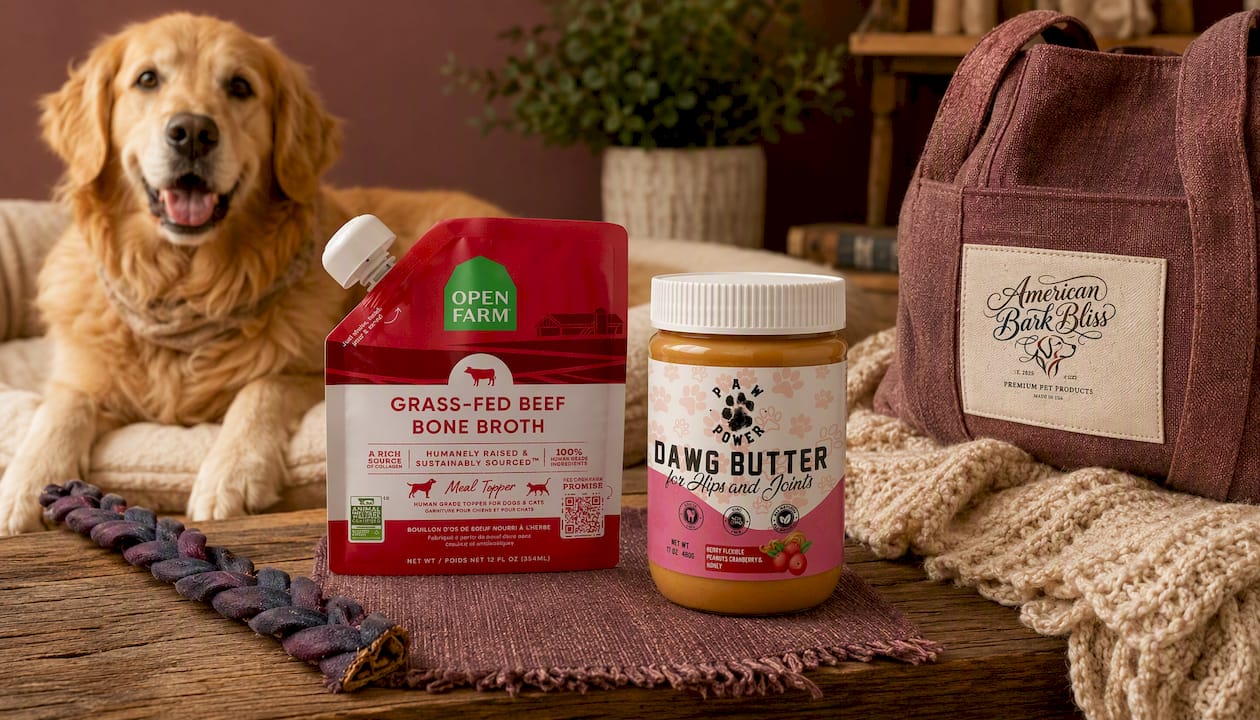
For picky eaters or dogs who need more hydration in their diet, Open Farm Beef Bone Broth For Dogs & Cats (12oz) works as a food-first topper that adds palatability without forcing a pill routine.
If you’re managing an ongoing hip or joint issue and want one convenient daily product rather than several, Dawg Butter Berry Flexible for Hips & Joints combines multiple joint-supporting ingredients into a single formula.
Not sure which fits your dog? Match the format to the goal: chew for enrichment and convenience, broth for hydration and appetite, combined formula for consistent daily joint support. Browse the full lineup and pick the one that matches your dog’s actual routine, not just the label that sounds best.
This article is general information, not a substitute for advice from a qualified doctor. Consult a qualified healthcare professional about your own circumstances before acting on anything here.
Sources
- PMCID PMC8956235
- Frontiers study: Efficacy of a joint supplement containing eggshell membrane among other ingredients to improve the mobility of dogs with osteoarthritis
- How joint supplements can help with orthopedic conditions | Cornell University College of Veterinary Medicine
FAQ
Do Vets Recommend Collagen for Dogs?
Many vets support collagen, especially UC-II, as part of a broader joint care plan, but they typically frame it as an adjunct to weight management and exercise rather than a stand-alone treatment.
What Are the Potential Side Effects of Collagen for Dogs?
Mild gastrointestinal upset, like loose stool or reduced appetite, is the most common issue, and it usually resolves by starting with a lower dose and increasing gradually with food.
What Are the Signs My Dog Needs Collagen?
Watch for stiffness after rest, hesitation on stairs, reduced willingness to jump or play, and a duller coat, these are the functional cues that suggest joint or skin support could help.
How Often Should I Give My Dog Collagen?
Most products call for daily dosing, and clinical trials showing benefit used consistent daily administration over 4 to 8 weeks before assessing results.
Leave a comment