

Best Feeding Accessories for Dogs: 2026 Guide
TL;DR:
- The best feeding accessories for dogs promote safe eating, hygiene, and mental enrichment. They include slow-feed bowls, puzzle feeders, and elevated stations that support health and posture. Regular inspection and replacement of damaged materials help ensure safety and cleanliness.
The best feeding accessories for dogs are those that promote safe eating habits, maintain hygiene, and provide genuine mealtime enrichment. The American Kennel Club and veterinary nutrition guidelines define quality feeding accessories as tools that reduce health risks, support proper posture, and engage a dog’s natural instincts. This guide covers the top categories every dog owner should know: slow-feed bowls, puzzle feeders, programmable feeders, feeding mats, elevated stations, lick mats, and snuffle mats. Each category is evaluated on material safety, functionality, and long-term value.
1. Best feeding accessories for dogs: slow-feed bowls and puzzle feeders
Slow-feed bowls and puzzle feeders are the single most impactful upgrade you can make to your dog’s mealtime routine. Fast eating causes bloating, regurgitation, and vomiting. Slow feeders and puzzle feeders significantly reduce all three risks by extending meal duration and forcing dogs to work for each bite.
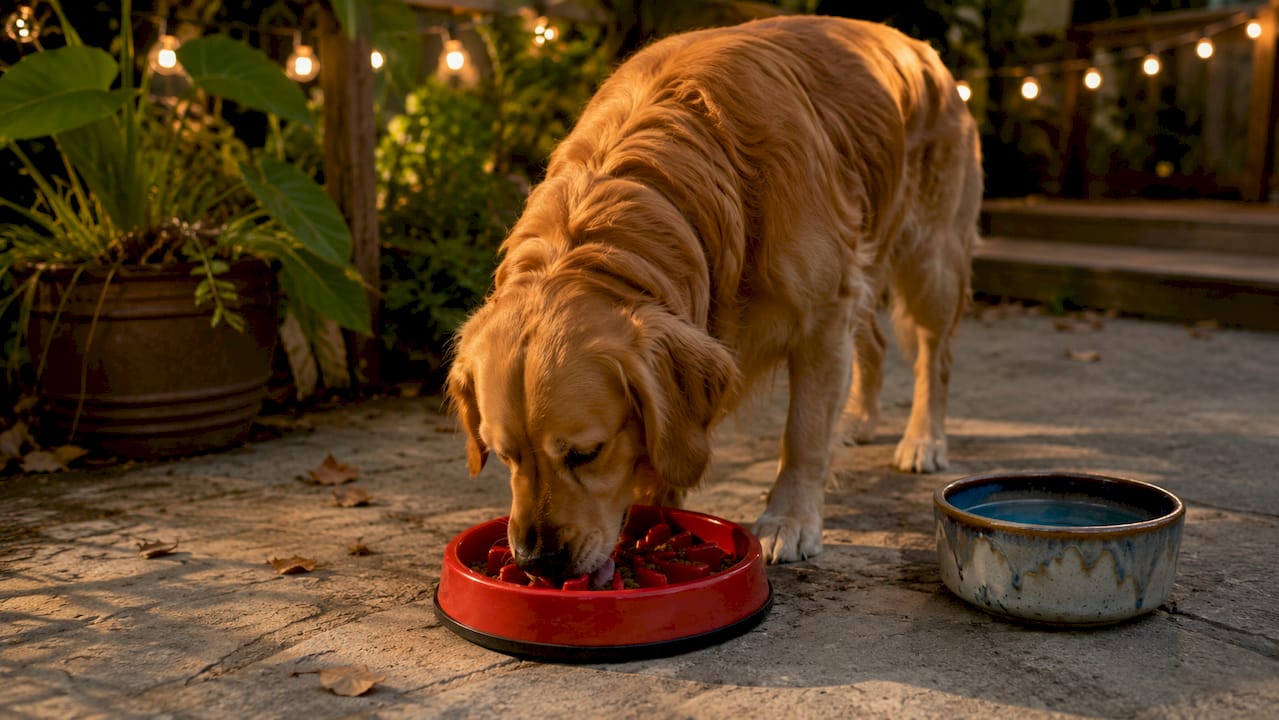
Puzzle feeders go one step further. They add mental stimulation to the physical act of eating, which tires dogs out in a healthy way. A dog that solves a puzzle feeder at dinner is less likely to be destructive an hour later.
Key features to look for:
- Maze or ridge patterns that force slower, deliberate eating
- Compatibility with standard bowls: interactive inserts fit bowls 7 inches or wider, holding up to 3 cups
- Non-toxic materials: food-safe silicone or BPA-free plastic
- Dishwasher-safe construction for consistent hygiene
- Size-appropriate difficulty: a maze too complex frustrates small breeds; too simple and it does nothing
Pro Tip: Start with a low-difficulty puzzle feeder and increase complexity over two to three weeks. Dogs that jump straight to hard puzzles often give up and eat around the obstacles.
Americanbarkbliss carries slow feeder dog bowls designed to fit standard bowl sizes and work across breed sizes.
2. Choosing the right material: what your dog’s bowl is made of matters
Bowl material is the most overlooked factor in dog feeding safety. Stainless steel and ceramic bowls inhibit bacteria better than most plastics because they are less porous. Bacteria colonize the microscopic scratches in plastic surfaces, and no amount of washing fully removes a mature biofilm.
Food-grade 304 stainless steel is the gold standard. 304 stainless steel bowls are corrosion-resistant and tested for heavy metals. Lower-grade metals risk toxin leaching and harbor bacteria in surface scratches. Not all stainless steel is equal, so check for the 304 designation before buying.
Veterinarian Dr. Amy Fox recommends stainless steel or ceramic for sensitive dogs specifically because of their superior hygiene and durability. Ceramic and stoneware bowls are a solid second choice, provided the glaze is lead-free and food-safe.
Plastic bowls are the weakest option. They scratch easily, harbor bacteria, and some dyes leach into food over time. If you currently use a plastic slow feeder, inspect it regularly.
Pro Tip: Run your fingernail across the inside of your dog’s bowl. If you feel grooves or roughness, replace it immediately. Surface damage is where bacteria live.
Americanbarkbliss offers deep stainless steel dog bowls in multiple sizes and colors, all made to food-safe standards.
3. Automated and programmable feeders for portion control
Programmable feeders solve two real problems: overfeeding and irregular meal timing. Both contribute to obesity and digestive issues in dogs. An automated feeder removes human error from the equation entirely.
Entry-level programmable feeders offer fixed meal counts and portion sizes. Premium models add Wi-Fi connectivity, voice recording, and remote adjustments from a smartphone. Programmable feeders vary widely in these features, so matching the feeder to your actual needs matters more than buying the most expensive option.
Key features worth evaluating:
- Meal scheduling: up to 5 meals per day at set times
- Portion accuracy: models like the PetSafe Eatwell 5-Meal deliver up to 5 discrete 1-cup servings per day
- Power source: battery backup prevents missed meals during outages
- Hopper capacity: larger hoppers suit bigger dogs or multi-day travel
- Cleaning design: removable bowls and hoppers make weekly cleaning practical
Automated feeders work especially well for dogs on medically prescribed diets where portion size is non-negotiable. They also reduce anxiety in dogs that expect meals at exact times, since the feeder delivers on schedule even when you are running late.
4. Feeding mats and elevated feeders: hygiene and posture
Feeding mats and elevated feeders address two separate but related problems: floor mess and physical strain. Both are worth adding to any dog feeding station setup.
Food-safe silicone mats contain spills, prevent bowl movement, and protect flooring from water and food debris. Anti-slip properties keep the bowl in place during enthusiastic eating, which matters most for large breeds and fast eaters. Silicone mats are also dishwasher-safe, which makes weekly cleaning a non-issue.
Elevated feeders address posture. Elevated feeding stations reduce physical stress on a dog’s neck and head, improving joint and posture health. This benefit is most significant for aging dogs, large breeds, and dogs recovering from orthopedic issues.
| Feature | Feeding Mat | Elevated Feeder |
|---|---|---|
| Primary benefit | Mess containment | Neck and joint strain reduction |
| Best for | All breeds and ages | Large breeds, senior dogs |
| Material | Food-safe silicone | Wood, stainless steel, or BPA-free plastic |
| Cleaning | Dishwasher-safe | Wipe-down or removable bowl |
| Anti-slip | Yes, standard feature | Base grip pads recommended |
Manufacturers note that elevated feeders reduce neck strain and promote ergonomic feeding posture, which is particularly important for aging dogs. Pair an elevated feeder with a silicone mat underneath for the cleanest, most comfortable setup.
5. Enrichment accessories: lick mats and snuffle mats
Lick mats and snuffle mats are the most underrated items on any best dog feeding accessories list. They do not just slow eating. They actively reduce anxiety and satisfy natural instincts that a standard bowl never touches.
Licking is a soothing activity for dogs. Lick mats use textured silicone surfaces to spread food thinly, forcing slow, deliberate licking that extends mealtime and triggers a calming response. Certified dog trainer Sassafras Patterdale highlights how puzzle feeders and lick mats engage natural foraging instincts and reduce anxiety, making them effective tools for dogs with stress-related behaviors.
Snuffle mats work differently. Fabric strips hide kibble or treats, requiring dogs to use their nose to forage. This mimics natural hunting behavior and provides genuine mental fatigue, not just physical fullness.
Benefits at a glance:
- Anxiety relief: licking triggers endorphin release, calming nervous dogs
- Slower eating: textured surfaces make gulping physically impossible
- Mental stimulation: snuffle mats engage scent-driven foraging instincts
- Versatility: both tools work with wet food, dry kibble, peanut butter, or pureed treats
- Portability: flat design makes them easy to use during travel or vet visits
Pro Tip: Rotate between a lick mat and a snuffle mat every few days. Dogs habituate quickly to the same enrichment tool, and novelty is what keeps the mental engagement high.
Americanbarkbliss carries dog lick mats and options sized for smaller breeds through their lick mats for small dogs collection.
6. Maintenance: when to replace feeding accessories
Replacement timing is the part of the best dog feeding accessories list that most owners ignore. A bowl or mat that looks fine on the surface can be a bacterial hazard underneath.
Plastic slow feeders and mats need replacement once they show deep chew marks or surface degradation. Biofilm builds up in damaged plastic surfaces and cannot be removed by washing. The same rule applies to silicone: if the surface tears or develops deep grooves, replace it.
Stainless steel and ceramic bowls last far longer, but ceramic can crack and harbor bacteria in hairline fractures. Inspect ceramic bowls monthly. Stainless steel bowls should be replaced if the interior surface shows pitting or rust spots, which signals lower-grade metal.
A practical replacement schedule: check plastic and silicone accessories monthly, replace annually or sooner if damaged. Check ceramic quarterly. Stainless steel bowls can last years with proper care. For a deeper look at setting up a complete feeding routine, the pet feeding accessories guide from Americanbarkbliss covers the full picture.
Key takeaways
The most effective feeding accessories for dogs combine material safety, enrichment design, and consistent maintenance to protect health and support natural behavior.
| Point | Details |
|---|---|
| Material safety is non-negotiable | Choose food-grade 304 stainless steel or lead-free ceramic bowls to minimize bacterial risk. |
| Slow feeders prevent real health risks | Slow-feed bowls and puzzle feeders reduce bloating, regurgitation, and vomiting in fast eaters. |
| Enrichment tools reduce anxiety | Lick mats and snuffle mats engage foraging instincts and trigger calming responses through licking. |
| Elevated feeders protect joints | Raised feeding stations reduce neck and joint strain, especially for large breeds and senior dogs. |
| Replace damaged accessories promptly | Plastic and silicone with surface damage harbor biofilm that washing cannot remove. |
What I’ve learned after years of watching dogs eat
Most dog owners buy a bowl once and never think about it again. That is the single biggest mistake I see. The bowl is the piece of equipment your dog uses every single day, twice a day, for years. Getting it wrong compounds quietly.
The shift I recommend to every owner is to think of feeding accessories as a system, not individual items. A food-grade stainless steel bowl, a silicone mat underneath, and a lick mat or puzzle feeder for at least one meal per day. That combination handles hygiene, posture, and mental engagement in one setup.
The enrichment piece surprises people the most. A dog that gets a snuffle mat at dinner is noticeably calmer within a week. The foraging behavior burns mental energy that would otherwise go into barking, chewing, or pacing. It is not a trick. It is biology.
The technology side, specifically programmable feeders, is genuinely useful for dogs on strict diets or owners with unpredictable schedules. But I would not start there. Get the bowl material right first. Then add enrichment. Then automate if your lifestyle calls for it. Skipping straight to a Wi-Fi feeder while using a scratched plastic bowl is solving the wrong problem.
— Christopher
Quality dog feeding products from Americanbarkbliss
Americanbarkbliss curates feeding and enrichment products built to the standards covered in this guide, with an emphasis on American-made quality and materials you can trust.
Their Americana Chicken Chips for Dogs are a USA-made treat that pairs perfectly with lick mats and puzzle feeders, giving you a high-value reward to spread or hide during enrichment sessions. For owners building out a full feeding station, Americanbarkbliss also carries stainless steel bowls, slow feeders, and lick mats across breed sizes. Every product reflects the same commitment to safety and durability that your dog’s daily routine deserves. Browse the full feeding accessories collection to find the right fit for your dog.
FAQ
What are the safest dog bowl materials?
Food-grade 304 stainless steel and lead-free ceramic are the safest options. Both are less porous than plastic and inhibit bacterial growth more effectively.
How do slow-feed bowls help dogs?
Slow-feed bowls extend meal duration, which reduces the risk of bloating, regurgitation, and vomiting caused by fast eating. They work best when sized to your dog’s breed.
Are lick mats good for anxious dogs?
Yes. Licking triggers a calming response in dogs, and lick mats extend that behavior through textured surfaces that require slow, deliberate licking. Certified trainer Sassafras Patterdale recommends them specifically for anxiety reduction.
How often should I replace my dog’s feeding accessories?
Inspect plastic and silicone accessories monthly and replace them at the first sign of surface damage. Stainless steel bowls last years with proper care; ceramic should be replaced if cracks appear.
Do elevated feeders actually help dogs?
Elevated feeders reduce neck and joint strain during meals, which benefits large breeds and senior dogs most. Manufacturers and veterinary sources both support their use for dogs with posture or orthopedic concerns.
Leave a comment